Damage at the end of a rental: what must the landlord and tenant prove?
The end of a rental agreement can give rise to disputes over the condition of the property, the disappearance of furniture or appliances, and the return of the security deposit.
In these cases, it is not enough for one of the parties to claim that the property was in good or poor condition. For a claim to succeed, it is necessary to provide evidence that allows a comparison between the condition in which the property was handed over and the condition in which it was returned.
A recent judgment by the Provincial Court of Barcelona highlights the importance of properly documenting the condition of the property throughout the entire tenancy.
The case analysed by the Provincial Court of Barcelona
Judgment No. 39/2026, of 2 February, issued by the Fourth Section of the Provincial Court of Barcelona, analyses a dispute that arose at the end of a rental agreement.
The landlord claimed outstanding rent and utility bills, as well as compensation for the damage that, according to him, the property had sustained. He also claimed that various items of furniture, household appliances and belongings had disappeared.
The tenant argued, on the other hand, that the property was already in a deteriorated condition when the tenancy began and that she had had to carry out various repairs to make it habitable.
The Provincial Court essentially upheld the first-instance judgment and examined which damage and circumstances had actually been proven by each of the parties.
The judgment highlights an essential point: in disputes over damage, the outcome of the proceedings depends to a large extent on the evidence available.
Does the tenant have to return the property in the same condition?
As a general rule, the tenant must return the property in the condition in which they received it, except for deterioration resulting from the passage of time and normal use of the property.
Article 1561 of the Spanish Civil Code establishes the tenant’s obligation to return the property at the end of the tenancy in the same condition in which they received it, except for anything that has been lost or deteriorated due to the passage of time or an unavoidable cause.
In addition, Article 1562 provides that, if there is no description of the condition of the property at the time it is handed over, it is presumed that the tenant received it in good condition, unless proven otherwise.
For its part, Article 1563 establishes that the tenant is liable for any deterioration or loss occurring during the tenancy, unless they can prove that it occurred through no fault of their own. The Civil Code applies on a supplementary basis to residential tenancies, in accordance with Article 4 of the Urban Leases Act.
This does not mean that the tenant must bear the cost of every repair. The landlord cannot claim for damage resulting from ordinary use, the age of the fixtures or defects that already existed before the contract was signed.

The landlord must prove the damage claimed
When a landlord claims compensation for damage, they must prove both the existence of the damage and its connection with the tenant’s actions.
For this purpose, it is particularly important to demonstrate:
- The condition of the property at the beginning of the tenancy.
- The condition of the property when possession was recovered.
- The difference between those two points in time.
- The cost of repairing or replacing the damaged items.
It is not sufficient to submit photographs taken only at the end of the tenancy. Without earlier images, it may be difficult to determine whether the damage already existed, whether it is due to ordinary wear and tear, or whether it was caused during the term of the tenancy.
It will also be necessary to provide financial evidence supporting the claim, such as invoices, estimates, technical reports or other documents that make it possible to determine the actual cost of the repairs.
How important is the inventory?
The inventory is particularly important when the property is rented furnished. It is not enough to state in general terms in the contract that the property contains furniture or household appliances. It is advisable to identify the items in each room and describe their condition.
In the case analysed, the lack of sufficiently detailed identification made it difficult to claim for certain items of furniture and belongings that the landlord said had disappeared. The Provincial Court considered that it had not been adequately proven that some of those items were in the property when the tenancy began.
For this reason, the inventory should include, whenever possible:
- The furniture in each room.
- Household appliances, indicating their brand or model.
- Their condition and whether they are in working order.
- Any defects or damage already present.
- The corresponding photographs.
The inventory should be attached to the contract as an annex and signed by both parties.
Photographs at the beginning and end of the tenancy
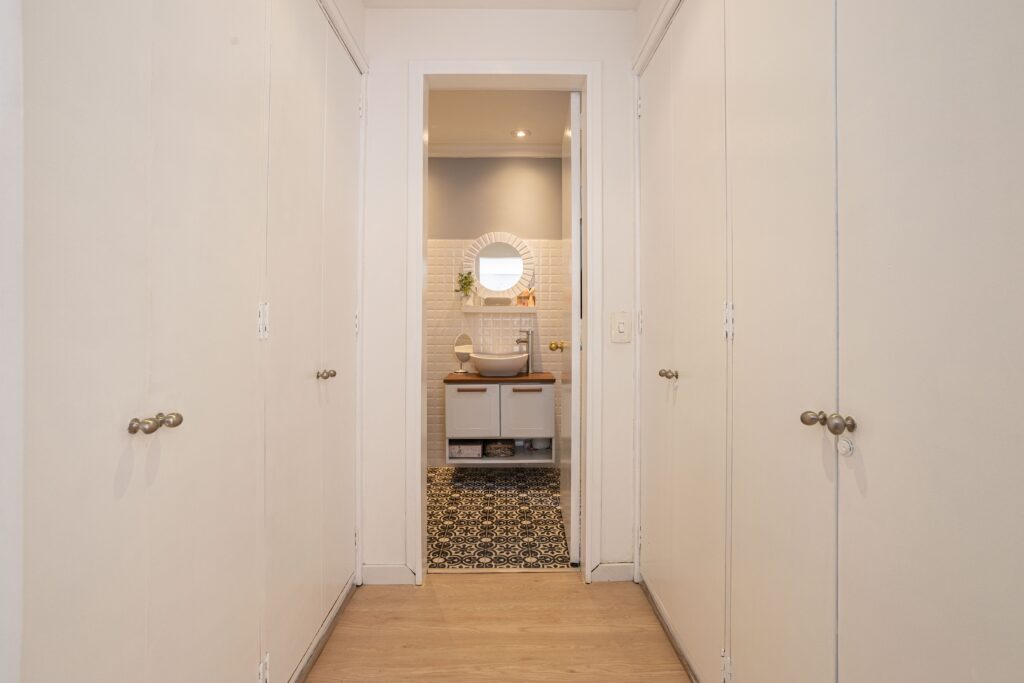
A photographic report helps complete the inventory and provides visual evidence of the condition of the property. The photographs should show the different rooms, walls, floors, windows, bathrooms, furniture and household appliances. It is advisable to keep the original files and for both parties to acknowledge that the images reflect the condition of the property at the time it is handed over.
The same procedure should be repeated at the end of the contract, preferably before or during the return of the keys.
This way, if a dispute arises, the initial and final condition of the property can be compared.
Breakdowns must be reported in writing
The judgment also highlights the importance of reporting breakdowns or damage as soon as they are detected.
In the case analysed, the tenant claimed that certain household appliances and installations were already faulty at the beginning of the tenancy. However, the absence of clear communications to the landlord made it difficult to prove this version of events.
Article 21 of the Urban Leases Act requires the tenant to inform the landlord, as soon as possible, of the need to carry out repairs in order to keep the property in habitable condition. It also establishes that minor repairs required due to wear and tear caused by ordinary use are the tenant’s responsibility.
For this reason, any breakdown should be reported in writing, indicating when it was detected and, where possible, attaching photographs or videos.
Can the tenant carry out repairs or improvements?
The tenant should not carry out significant works or alterations without the landlord’s prior written authorisation. Article 23 of the Urban Leases Act prohibits the tenant from carrying out, without the landlord’s written consent, works that alter the configuration of the property or its accessories.
If the tenant pays for a repair, it is also advisable to keep a written record of whether the landlord authorised the work and who is ultimately responsible for the cost.
Verbal conversations are difficult to prove. For this reason, any agreement concerning works, repairs, replacement of household appliances or removal of furniture should be formalised in writing.
The return of the keys should also be documented
Returning the keys should not be limited to handing over the property and signing a receipt.
It is advisable to carry out a joint inspection and prepare a document recording:
- The date on which the property is handed back.
- The number of keys returned.
- The general condition of the property.
- Any damage observed.
- The meter readings.
- Any outstanding rent or utility bills.
- The photographs taken at that time.
This document does not prevent a hidden defect or an outstanding invoice from being claimed later, but it provides a record of the apparent condition of the property when the contract ends.
Can the cost of damage be deducted from the security deposit?
The landlord may use the security deposit to cover unpaid rent, utility bills or damage attributable to the tenant, provided that these amounts are properly substantiated. The deposit cannot be withheld merely because there are signs of wear and tear or on the basis of a general assessment. Any deductions should be supported by photographs, invoices, estimates or other documents.
Article 36.4 of the Urban Leases Act establishes that any balance of the security deposit that must be returned to the tenant accrues legal interest once one month has elapsed since the keys were handed back, if the amount has not been refunded.
The importance of documenting the tenancy from day one
The main conclusion of the judgment of the Provincial Court of Barcelona is that disputes over the condition of a property should not be dealt with only once a claim has already arisen.
Both landlord and tenant should keep, from the beginning of the tenancy, a signed inventory, photographs, communications regarding breakdowns, authorisations for works and supporting documents for any repairs carried out. Proper documentation helps prevent disputes and, if the disagreement reaches the courts, makes it easier to establish which damage already existed, when it occurred and who is responsible for it.

Contactar
Contáctanos para solicitar información sobre temas relacionados con Real estate law