Buying property in Spain: what you need to know before starting the process
According to the latest report by the Spanish Registrars, 21,500 property purchase deeds were granted to foreign buyers during the first quarter of 2024. This represents a 7.5% increase compared to the previous quarter. Due to the growing interest among foreign buyers, we believe it may be useful to offer some guidance on how to buy property in Spain as a non-resident. Our advice refers to a standard purchase transaction without bank financing.
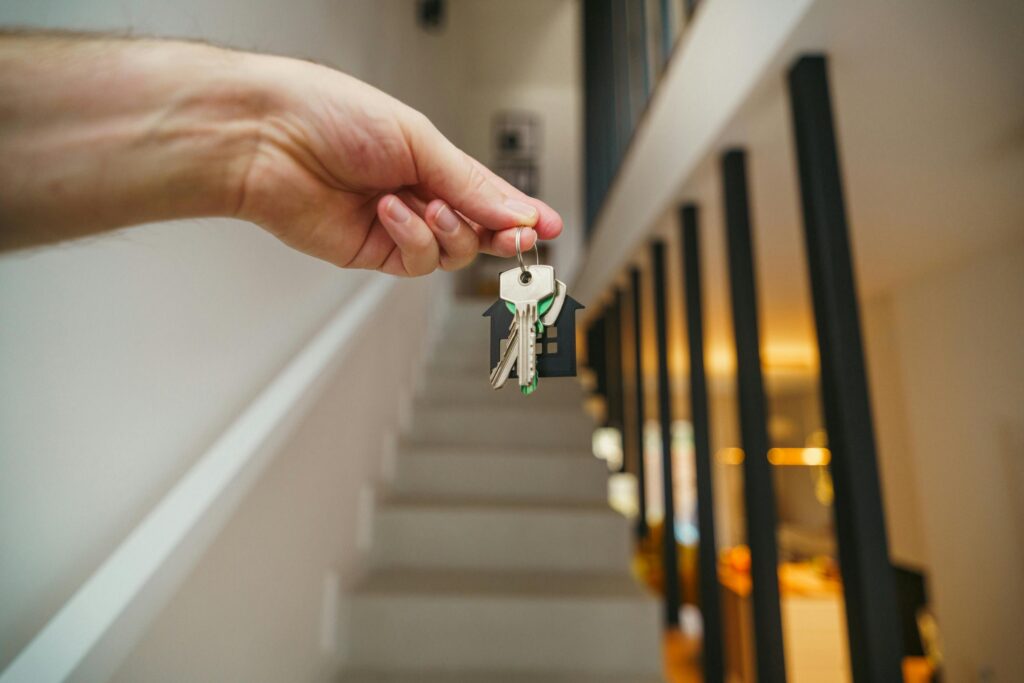
Legal steps to buy property in Spain
1. Hire a lawyer before buying property in Spain
Once the right property has been found, before signing any agreement/document or paying any amount, it is highly advisable to hire a lawyer to carry out an initial legal assessment of the property and to advise you on the agreements/documents that will be signed, in order to avoid unpleasant surprises.
2. Sign a reservation agreement
In some cases, in order to remove the property from the market for a certain period of time, the potential buyer may be asked to sign a reservation agreement and usually pay between €3,000 and €10,000 as a deposit. The amount will depend on the final price at which the property is offered on the market. This period of time will allow the potential buyer to carry out the appropriate legal checks. Generally, the reservation funds are transferred to the real estate agency handling the transaction and will be refunded if issues arise during the legal checks.
3. Legal checks prior to buying property in Spain
It is important to verify, among other aspects:
- Who owns the property. In the case of co-ownership, all co-owners must have given their consent to the transaction. This information can be obtained from the Land Registry. Even if there is no co-ownership, if the seller is married, the marital property regime must be checked, as the consent of the other spouse may be required.
- The legal status of the property — whether the property is free of charges, mortgages, or encumbrances. This information can also be obtained from the Land Registry. If there is a mortgage on the property, the seller must provide the potential buyer with the documents related to the mortgage.
- Whether there are any urban planning limitations affecting the property. It is possible to obtain a certificate from the Town Hall regarding the status of the property, although this may take approximately one month. In some cities, basic urban planning information can be obtained through the official Town Hall website. If the property is close to the sea, it is also advisable to check whether there are any easements affecting the property. This information can be obtained from the Town Hall or from the Coastal Authority.
- The validity of the certificate of habitability, which proves that the property meets all the requirements to be inhabited. The seller is obliged to show this document to the potential buyer.
- If the property is part of a homeowners’ association, the status of payment of the community fees. The seller must provide a certificate issued by the community administrator for this purpose.
- Whether the property is free of occupants.
- Whether the municipal tax has been paid (IBI – Property Tax). Otherwise, the buyer will be responsible for paying this tax.
- Whether the property is subject to a mandatory Technical Inspection and therefore whether it has passed such inspection.
4. Sign the deposit contract (arras)
After successfully completing the appropriate legal checks, the next step is to sign a deposit contract (“arras”). In this contract, the buyer and the seller agree on the terms and conditions of the sale, including the price of the property and the maximum period within which the public deed of sale must be signed.
Normally, the buyer pays 10%–20% of the purchase price as a deposit (“arras”), which will be deducted from the total price when the public deed is signed. Depending on the contractual terms, if the buyer decides not to proceed with the purchase, they may lose the amount paid as the deposit, whereas if the seller decides to withdraw from the sale, they must return double the amount to the buyer.
5. Obtain the Foreigner Identification Number (NIE)
Foreigners who buy property in Spain are required to obtain a Foreigner Identification Number (NIE). This number, which will later correspond to the tax identification number, is required for all financial and legal transactions in Spain and, therefore, also to open a bank account in Spain. The NIE can be obtained at a National Police station in Spain or at the Spanish embassy or consulate in the buyer’s country of residence.
6. Open a bank account in Spain
To facilitate payment of the property and other related expenses, it is advisable for the buyer to open a bank account in Spain. This account will be used to transfer the funds required for the purchase and to pay the taxes and fees associated with the property. This aspect is not secondary. Very often, foreign buyers ask whether they can transfer the purchase funds directly from their bank abroad. The transaction itself is perfectly lawful; the problem lies in the seller’s payment guarantees, since until the funds have been received in their bank account, the seller will not be willing to formally transfer ownership of the property.
On the other hand, the potential buyer will also not be comfortable sending the funds to the seller before the public deed of sale is signed. Therefore, to overcome this impasse, the best solution is to make the payment by means of a bank cheque issued by a bank in Spain, or to make a transfer via the Bank of Spain, which in theory allows the funds to arrive within a few minutes. Another solution is to use a notary’s escrow account, whereby the notary will transfer the funds to the seller only once the deed of sale has been executed. However, this is not a very common practice, and many notaries prefer not to assume this additional responsibility.
7. Execute the public deed before a notary
One of the final steps in the purchase process is signing the public deed of sale before a Spanish notary. The notary will review all documents and verify that everything is in order before proceeding with the signature. The deed of sale will also constitute the title transferring ownership from the seller to the buyer. The buyer has the right to choose a notary of their trust.
8. Register the property
After signing the public deed, it is necessary to register the change of ownership at the corresponding Land Registry. This step is crucial to ensure that the buyer is legally recognized as the legitimate owner vis-à-vis any third party.

Taxes when buying property in Spain
1. Taxes on the purchase
The sale of a property is subject to VAT and Stamp Duty (AJD – Tax on Documented Legal Acts) or Transfer Tax (ITP – Property Transfer Tax), depending on the status of the seller and the property. As a general rule, if the seller is a company or a professional and it is the first transfer of the property, the sale will be subject to VAT and Stamp Duty (AJD). If the property is second-hand, the sale will be subject only to ITP.
- VAT is currently 10% of the purchase price.
- Stamp Duty (AJD) may vary from one Autonomous Community to another (for example, in Catalonia it is currently 1.5% of the purchase price).
- ITP may also vary from one Autonomous Community to another (generally between 8% and 10% of the purchase price).
All these taxes must be paid by the buyer.
2. Taxes after buying property in Spain
Once the buyer becomes the owner of the property, the following taxes must be taken into account:
- Municipal Tax (IBI – Property Tax). This is an annual tax based on the cadastral value of the property. Each Town Hall sets the applicable rate.
- Non-Resident Income Tax (IRNR). As a non-resident, if the property is rented out, the owner must pay tax on the rental income (24% if not resident in the EU; 19% if resident in the EU) and must file a tax return annually during the first 20 days of January. If the property is not rented out, the owner must also pay income tax each year, calculated as a certain percentage of the cadastral value (generally 2%).
- Non-Resident Income Tax (IRNR) on capital gains. When the property is sold, IRNR must also be paid on the positive difference between the sale price and the acquisition cost. In the case of non-residents in Spain, the applicable tax rate on the gain will be the same as indicated in the previous point.
- Wealth Tax. Taxpayers are only individuals; however, a non-resident individual will also be subject to this tax if they hold an interest in an entity in Spain whose assets consist of at least 50% real estate.
Taxation may vary from one Autonomous Community to another. For example, in Catalonia there is an exemption up to €500,000, and the tax rate is progressive (for example, 0.210% on the first €167,129.45; 0.315% on the following €167,129.45).
Our firm has extensive experience in advising and assisting non-residents in the purchase of property in Spain. If you are interested in further information, we will be pleased to provide it. You can contact us to request a free quotation.
This note does not constitute legal advice and is for general information purposes only. It is always advisable to consult a professional to assess your specific case.

Contactar
Contáctanos para solicitar información sobre temas relacionados con Real estate law